
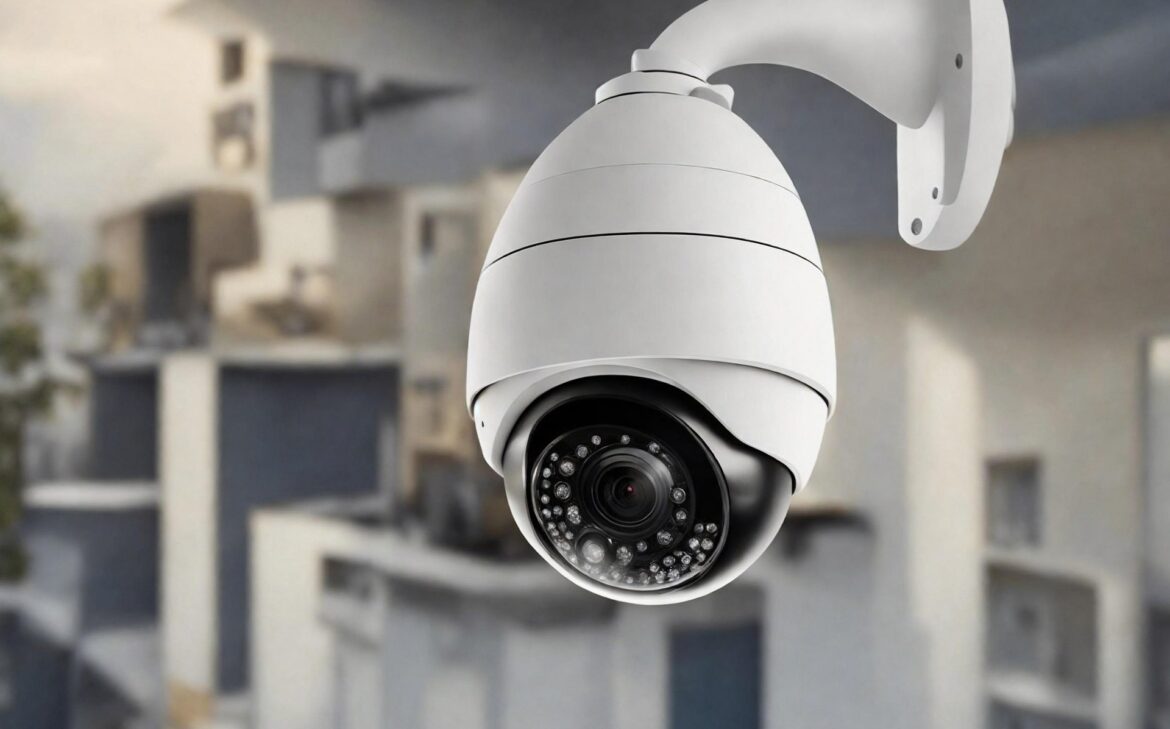
There’s a moment every security manager dreads — the one where they’re sitting across from a board member explaining how a breach happened, a theft went undetected, or an incident escalated before anyone noticed. In most of those moments, the absence of robust CCTV surveillance is a thread that runs quietly through the failure.
Closed-circuit television is no longer a niche security tool reserved for banks and airports. In the modern enterprise, it is foundational infrastructure — as essential as firewalls, access control systems, and HR policy. Yet many organizations still treat it as an afterthought, deploying cameras reactively after an incident rather than proactively as a strategic asset.
This post makes the case for why that mindset needs to change.
1. Deterrence: The Crime That Never Happens
The most undervalued benefit of CCTV is the one you can’t measure in an incident report — prevention.
Visible surveillance cameras fundamentally alter behavior. Studies consistently show that opportunistic theft, vandalism, and workplace misconduct drop significantly in surveilled environments. An employee reconsidering whether to remove a laptop from a server room, a visitor choosing not to photograph confidential materials on a whiteboard, a delivery contractor who thinks twice before falsifying a sign-off — these are invisible wins that never make it into a risk register but quietly protect the enterprise every day.
For large organizations with high foot traffic, open floor plans, and multiple access points, the deterrence value of a well-designed CCTV network is enormous. It creates a culture of accountability without requiring constant human oversight.
2. Physical Security: Protecting People, Not Just Property
Enterprise security has two dimensions — asset protection and people protection — and effective CCTV serves both.
Monitoring building perimeters, parking structures, stairwells, and common areas ensures that the physical safety of employees, contractors, and visitors is actively managed, not just assumed. Cameras positioned at entry points can detect tailgating — the practice of following authorized personnel through secure doors — one of the most common and underreported physical security vulnerabilities in corporate environments.
In the event of a workplace incident, whether it’s an altercation, a medical emergency, or an external threat, CCTV enables security teams to respond with accurate situational awareness rather than incomplete verbal reports. The difference between a two-minute and a ten-minute response time can be life-altering.
Modern IP-based systems can integrate with access control and alarm platforms to create unified security ecosystems that flag anomalies automatically — a door held open too long, motion detected in a restricted area after hours, or an unrecognized face in a high-security zone.
3. Investigations and Evidence: When Things Go Wrong
Despite best efforts, incidents happen. When they do, CCTV footage is often the difference between resolution and ambiguity.
Consider the range of situations where recorded video provides critical value:
- Internal theft investigations: Without footage, theft cases frequently devolve into he-said/she-said disputes with no path to resolution. Video evidence enables HR and legal teams to act with confidence.
- Slip-and-fall and liability claims: Fraudulent or exaggerated personal injury claims cost enterprises millions annually. Camera footage either validates a claim or refutes it — both outcomes protect the organization.
- Data and IP breaches: Physical access to server rooms, printing sensitive documents, removing hardware — these insider threat activities often leave a digital footprint, but footage provides corroboration and timeline clarity.
- Workplace harassment or misconduct: Video evidence can substantiate or dismiss allegations, protecting both the accused and the accuser and allowing leadership to respond fairly.
Having a robust, well-archived CCTV system is not just good security practice — it’s sound legal risk management.
4. Operational Intelligence Beyond Security
Progressive enterprises are discovering that camera infrastructure, when thoughtfully deployed, delivers value well beyond its security mandate.
Space utilization analytics. Understanding how employees move through an office, which meeting rooms go unused, and when common areas peak helps facilities teams make data-driven decisions about layout and resource allocation — particularly valuable as organizations reimagine hybrid work environments.
Queue and flow management. In large campuses, manufacturing facilities, or reception areas, video analytics can detect bottlenecks and inform operational improvements in real time.
Compliance and procedural auditing. In regulated industries — finance, healthcare, manufacturing — CCTV provides a mechanism to verify that protocols are being followed, safety equipment is being worn, and controlled-access procedures are being respected.
The same cameras protecting the enterprise can inform it. That dual-purpose value proposition makes the ROI case significantly stronger.
5. Remote Monitoring and the Modern Distributed Enterprise
The enterprise is no longer a single building. Organizations today operate across campuses, multiple cities, and even continents. A regional office in one country, a data center in another, a pop-up workspace in a third — each carries its own risk profile and security requirement.
Cloud-connected CCTV systems allow centralized security operations centers to monitor distributed locations through a single pane of glass. An anomaly in a remote facility at 2 AM can trigger an alert reviewed by a security analyst on another continent before local staff even arrive for the morning shift.
This scalability — the ability to extend enterprise-grade surveillance to every location in a security framework — is one of the most compelling arguments for modern IP-based CCTV architectures. Unlike legacy analog systems, these platforms grow with the organization and integrate with the broader security stack.
6. Compliance, Insurance, and Due Diligence
Regulatory frameworks across industries increasingly mandate or strongly recommend physical security controls that include surveillance. ISO 27001, SOC 2, PCI-DSS, and various industry-specific standards either explicitly require or implicitly expect organizations to demonstrate control over physical access to sensitive environments.
CCTV is one of the most demonstrable, auditable controls an enterprise can present. During a compliance audit or security assessment, footage archives and monitoring logs provide concrete evidence of a functioning physical security program.
From an insurance standpoint, robust surveillance infrastructure frequently qualifies for premium reductions on commercial property and liability policies. Some insurers require evidence of CCTV coverage for certain coverage tiers. Either way, the investment offsets itself in part through reduced insurance costs and strengthened negotiating position.
7. Implementing Enterprise CCTV the Right Way
A CCTV system is only as valuable as its design, maintenance, and governance. Cameras bolted to walls without a strategy are expensive decoration. Effective enterprise deployment requires:
Strategic camera placement. Coverage should be risk-mapped — highest priority to entry/exit points, server rooms, executive areas, loading docks, and any zone where sensitive assets are handled. Blind spots should be explicitly documented and addressed.
Appropriate resolution and retention. Modern enterprises should be operating at 4K or at minimum 1080p, with retention periods matched to the risk profile and regulatory requirements of the business. Thirty days is often a baseline; financial or healthcare organizations may need significantly longer.
Access control over footage. Who can view recordings? Under what circumstances? Footage access should be logged, authorized at an appropriate level, and governed by clear policy. Misuse of surveillance footage is itself a liability.
Privacy and legal compliance. Surveillance must be balanced against employee privacy rights, which vary significantly by jurisdiction. Clear policies, transparent communication to staff about camera locations and purpose, and legal review of deployment plans are non-negotiable.
Regular audits and maintenance. Cameras fail. Storage fills. Coverage gaps emerge as offices are reconfigured. Surveillance infrastructure requires the same lifecycle management as any other technology asset.
The Bottom Line
Enterprise CCTV is not about distrust. It’s about accountability, safety, and operational intelligence — the same values that drive investment in cybersecurity, legal counsel, and financial controls.
The organizations that treat surveillance as a strategic asset — integrated, well-governed, and continuously maintained — are the ones that resolve incidents faster, deter losses more effectively, and demonstrate the kind of mature security posture that regulators, insurers, and partners recognize and reward.
The question is no longer whether enterprise CCTV is worth the investment. The question is whether your organization can afford to keep treating it as optional.


Leave feedback about this